Do mutual funds guarantee returns?
No. Mutual fund values can rise or fall, and past performance is not a guarantee of future results.
Understand how mutual funds pool money, how fund types differ, what NAV and expenses mean, and which risks to review before acting. Use the guides to build a foundation; they do not recommend a scheme or promise returns.
A mutual fund pools money from many investors and invests it according to a stated scheme objective. Investors hold units whose value can rise or fall with the underlying assets and costs. Fund category, risk, expense, time horizon and suitability all matter; past performance does not guarantee future returns.
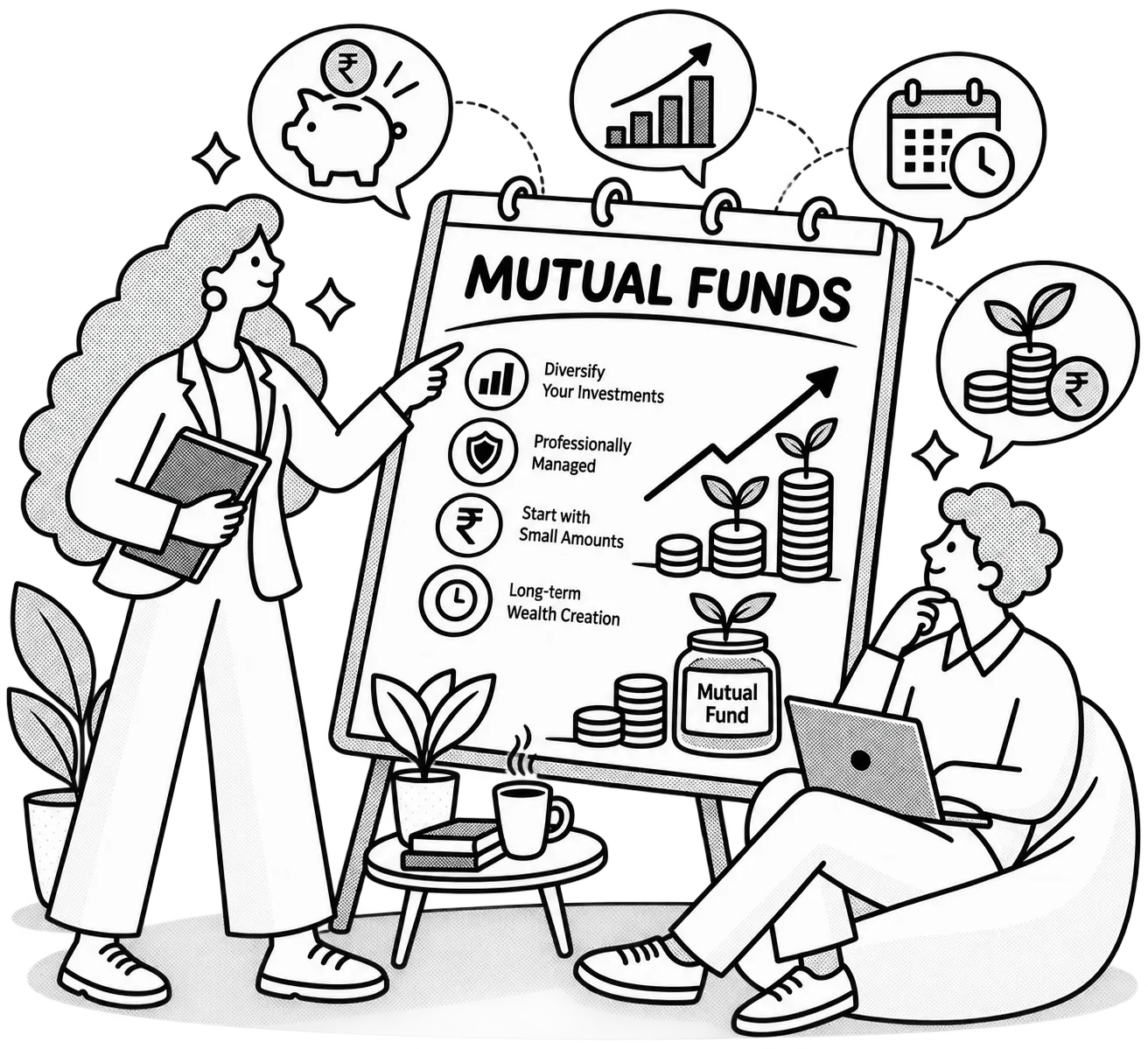
Review objective, riskometer, horizon, liquidity and documents.
Objective and category; asset mix and concentration; riskometer; benchmark; expense ratio; exit load and tax considerations; liquidity; tracking difference for index funds; and the difference between volatility, loss risk and suitability. These terms help you ask better questions; they do not name a “best” fund.
Use a calculator to explore contributions and assumptions—not to forecast a guaranteed return. If you request investment planning, identify whether the interaction is general education, distribution or another service, and show the relevant disclosures before collecting personal information.
No. Mutual fund values can rise or fall, and past performance is not a guarantee of future results.
Start with how funds and units work, then review category, riskometer, costs, time horizon, liquidity and scheme documents.
They relate to the same scheme portfolio but can differ in distribution route and expense structure; review current scheme information before deciding.
No. It is general education and does not recommend a particular scheme or replace an assessment of personal circumstances.
A calculator illustrates results from chosen inputs and assumptions; it does not predict or guarantee investment returns.
Help employees learn the concepts and risks before considering any optional next step.

Employee financial wellness, literacy sessions, and guided next steps for Indian workplaces.
Saventh Investment is an AMFI Registered Mutual Fund Distributor.
Disclaimer: Mutual fund investments are subject to market risks. Please read the scheme information and other related documents carefully before investing. Past performance is not indicative of future returns. Please consider your specific investment requirements before choosing a fund, or designing a portfolio that suits your needs.
Saventh Investment makes no warranties or representations, express or implied, on products offered through the platform of Saventh Investment. It accepts no liability for any damages or losses, however, caused, in connection with the use of, or on the reliance of its product or related services. Terms and conditions of the website are applicable.
Investments in Securities markets are subject to market risks, read all the related documents carefully before investing.

AMFI Registered
ARN - 324457